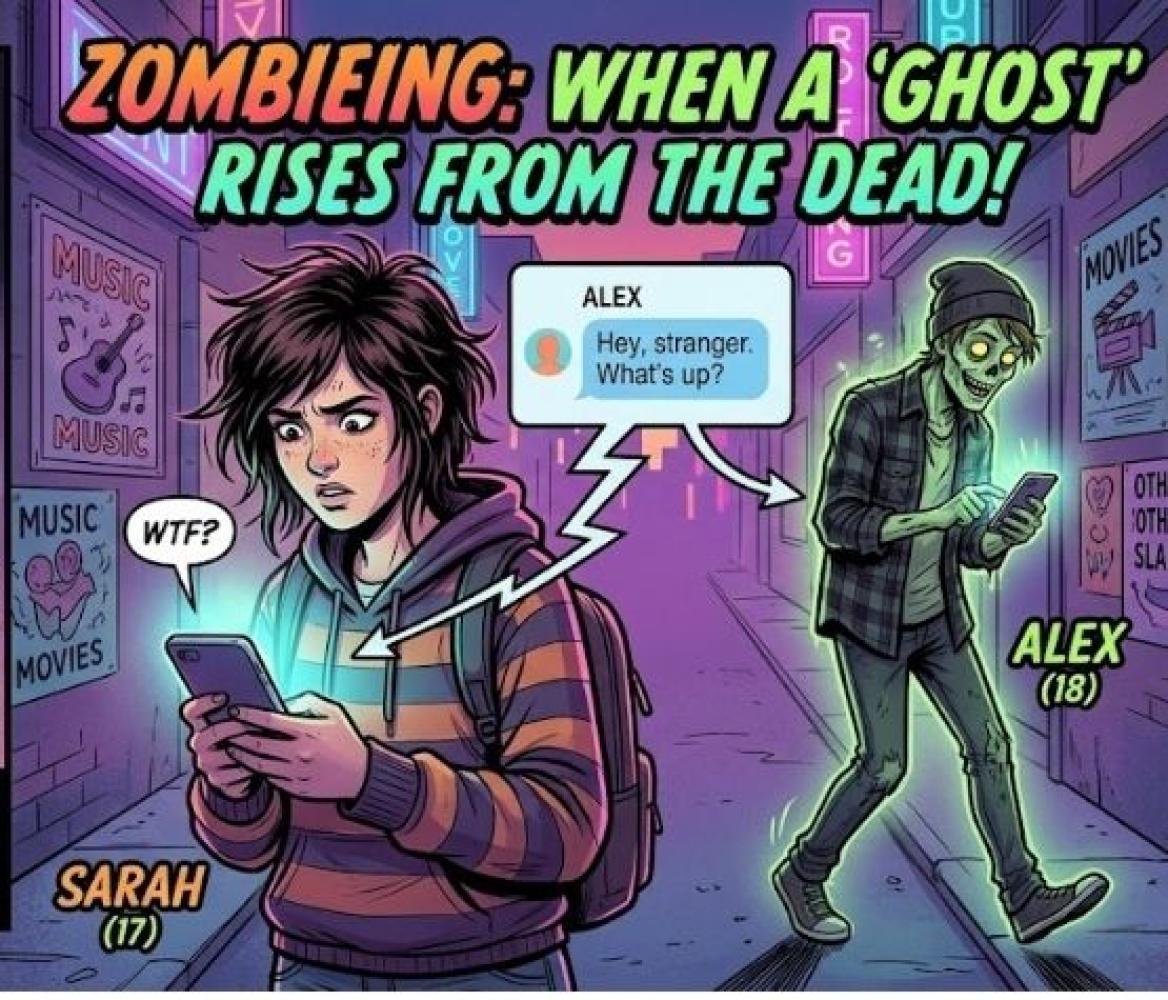
Just when you thought the digital dating world couldn't get any spookier than ghosting, a new trend has taken over teen relationship vocabulary: Zombieing.
If you are a parent, an educator, or a teenager trying to navigate the complex social landscape of today, understanding these hyper-specific digital behaviors is essential. Today's youth are dealing with a dating environment that is fast-paced, highly digitized, and deeply exhausting.
Here is a breakdown of what "Zombieing" actually means, why it’s trending, and how it fits into the broader shift in how teens approach connection.
We’re all familiar with ghosting—when someone you’re talking to suddenly vanishes into thin air, cutting off all communication without warning or explanation.
It happens when that exact same "ghost" suddenly rises from the dead weeks, months, or even a year later, casually sliding back into your life as if nothing ever happened.
A typical zombie encounter doesn't start with a profound apology or an explanation. Instead, it looks like:
According to relationship experts, zombieing is rarely about a genuine, sudden change of heart. More often, it’s driven by:
For the person on the receiving end, zombieing can be incredibly unsettling. It reopens old wounds, disrupts the healing process, and leaves them feeling confused or frustrated.
While trends like zombieing and "breadcrumbing" (giving just enough attention to keep someone interested) represent the chaotic side of digital dating, teens are starting to push back with a counter-movement.
Having grown up in a digital fishbowl, today's teenagers are beginning to value extreme intentionality and emotional safety over short-lived digital drama. We are seeing a major shift toward:
If a digital ghost tries to wander back into your life (or your teen’s life), the best response is often no response at all.
Without genuine accountability and a valid explanation for their initial disappearance, a zombie is highly likely to repeat the pattern and disappear again. Protecting your internal peace and your emotional baseline matters far more than satisfying a ghost's curiosity.
Have you or your teen ever encountered a "zombie" text? How did you handle the digital resurrection?

Have you ever found yourself replaying a five-second conversation in your head for hours? Or perhaps...
Read More
While we often associate birthdays with colorful balloons and tiered cakes, the significance of a bi...
Read More
In the modern era, we have become obsessed with the "return on investment" of our time. Even our lei...
Read More